The Great AI Energy Debate: Can Data Centers Stay Sustainable?
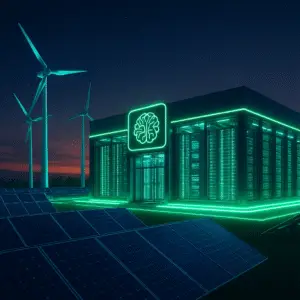
Every new AI model seems smarter — and hungrier. Behind every ChatGPT or Gemini lies a datacenter consuming gigawatt of power and millions of liters of water. The question haunting the AI boom: Can intelligence scale without burning the planet?
What’s Happening
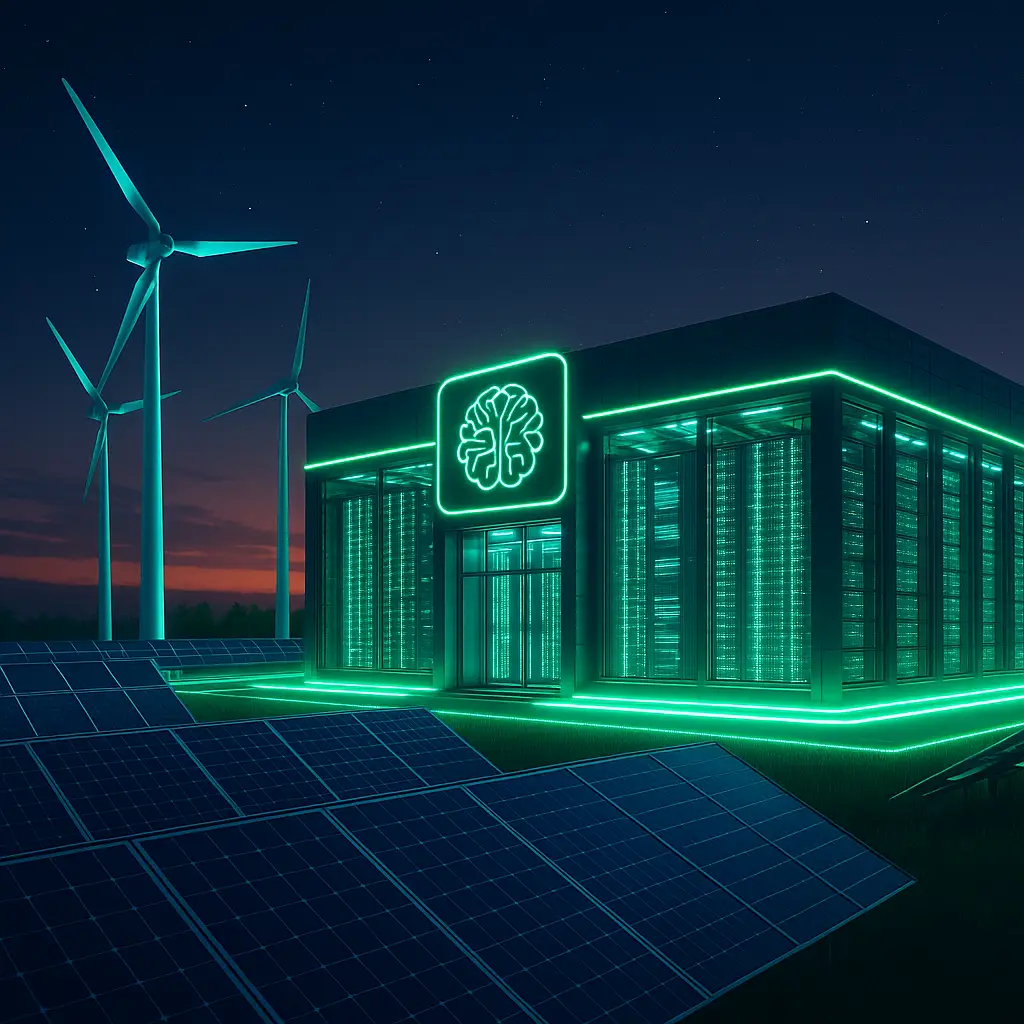
AI compute demand is exploding. Data centers now consume 4–5% of global electricity, up from 1% five years ago. Tech giants including Microsoft, Google, and OpenAI are scrambling to offset emissions with renewables.
- Microsoft’s Iowa AI center reportedly used 1.7 billion liters of water for cooling (2024).
- Google’s 2025 “Green TPU Clusters” use liquid immersion cooling to cut power draw by 22%.
- OpenAI’s Stargate project aims to co-locate with hydroelectric grids to reduce carbon load.
Why It Matters
The sustainability debate isn’t theoretical — it’s existential. AI growth could soon exceed grid capacity in regions like Texas and Ireland.
- Policy pressure: The EU is drafting “AI Energy Disclosure Directives.”
- Corporate response: Amazon Web Services plans 100% renewable AI zones by 2026.
- Innovation push: Startups like Heata and Submer are repurposing AI heat for district heating systems.
“The AI boom won’t slow down — so sustainability has to catch up.”
What’s Next
- Green Compute Credit Markets will emerge to trade carbon-neutral AI power.
- Hybrid cloud deployments will optimize for both cost and energy.
- New hardware designs — optical chips and low-power AI cores — are in the pipeline.
- Public scrutiny will grow as AI usage enters mainstream politics.
Key Takeaways
- Data centers could consume 5–8% of global power by 2027.
- Renewables and cooling innovation are critical to AI’s future.
- Expect “energy efficiency scores” to become AI benchmarks alongside accuracy.
- The sustainability of intelligence is the defining tech question of the decade.