OpenAI Launches AgentKit, Ushering in Agentic AI Era
OpenAI’s AgentKit Launches a New Era for Autonomous AI Agents
At DevDay 2025, OpenAI unveiled AgentKit, a comprehensive toolset enabling developers and enterprises to build, test, and deploy true AI agents. This marks a pivotal moment: transitioning from reactive assistants to goal-driven, autonomous agents that can plan, act, and reason across tools.
What Happened
- OpenAI introduced AgentKit — a modular toolkit for agent creation (tool use, planning loops, environment integration).
- The release coincides with updates to the Codex model aimed at improved code generation and agent-level functionality.
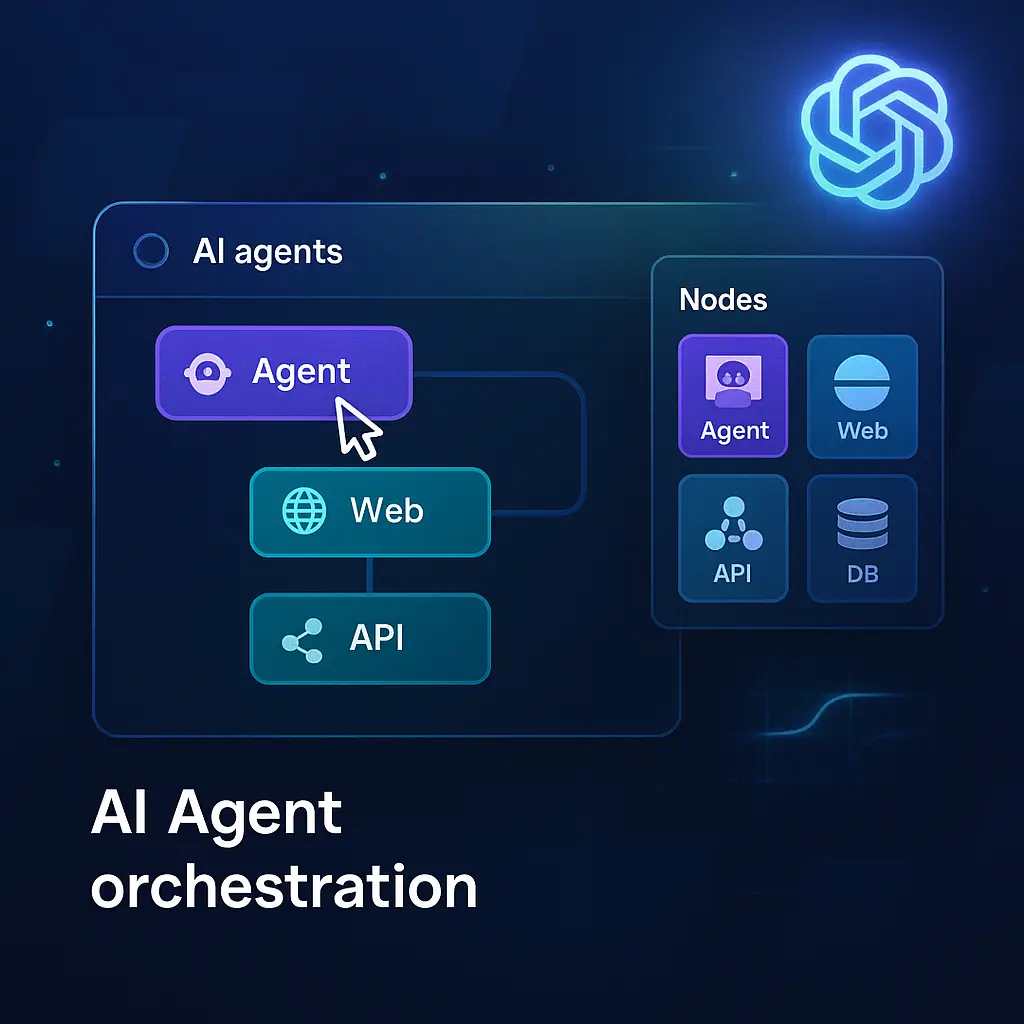
- AgentKit features drag-and-drop agent building, built-in memory modules, tool chaining, and support for multi-agent orchestration.
Why It Matters
- Democratizes agent development. Previously, AI agents required complex frameworks and deep architecture work. AgentKit simplifies that.
- Increases utility of AI. Agents built with AgentKit can automate multi-step tasks, integrate with APIs, and act like intelligent workers.
- Accelerates developer ecosystem. As more tools integrate with AgentKit, we may see a surge in AI apps that are more agentic than conversational.
- Strategic positioning. This reinforces OpenAI’s dominance in the agentic AI stack, making it harder for competitors to match integrated tooling.
What’s Next
- Wider availability: Enterprise and Third-party access expected in coming months.
- Enhanced agent features: longer memory, invention, self-evaluation.
- Ecosystem growth: Plugins, libraries, third-party agent marketplaces will emerge.
- Standards formation: AgentKit may influence or align with protocols like MCP (Model Context Protocol) for agent interoperability.
“AgentKit turns AI from talking to doing.”
Key Takeaways
- AgentKit is OpenAI’s new modular agent development toolkit.
- Empowers agents to plan, chain tools, and execute complex tasks.
- Simplifies the path from prototyping to production AI agents.
- Likely to stimulate a wave of agentic applications and ecosystems.