The Future of Work in the Age of AI (2025–2035)
The Future of Work in the Age of AI (2025–2035)
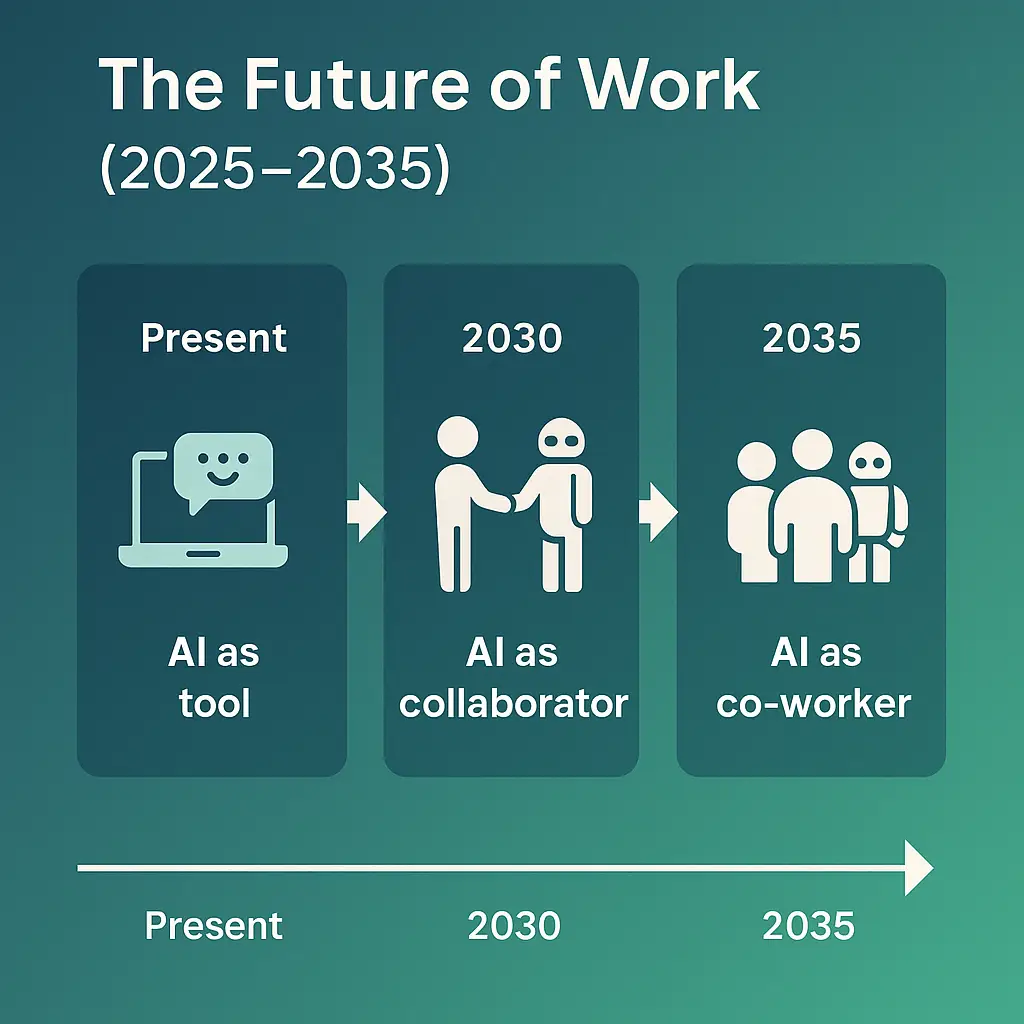
Artificial intelligence is no longer just a productivity tool — it’s reshaping how, where, and why we work. The decade ahead will see humans and AI co-create new workflows, professions, and even economic models.
🔹 How AI Is Changing Work Today
-
Automation of Routine Tasks → From email triage to code debugging, AI handles repetitive workflows.
-
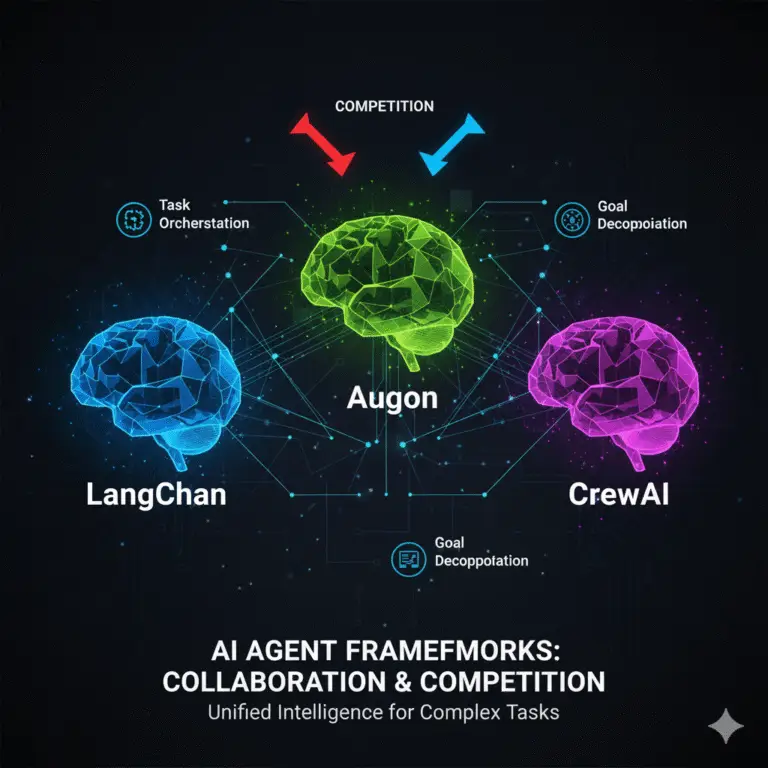
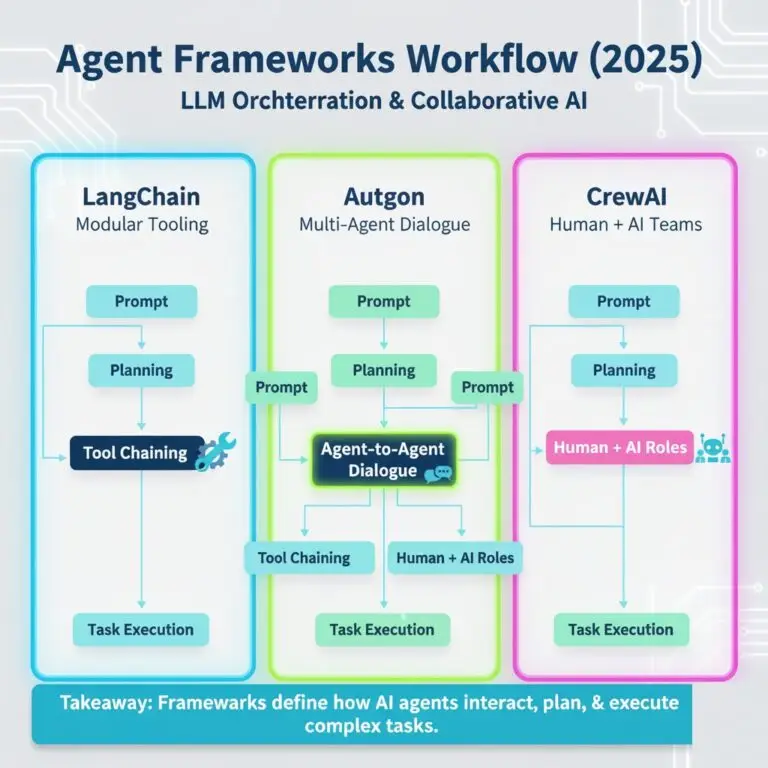
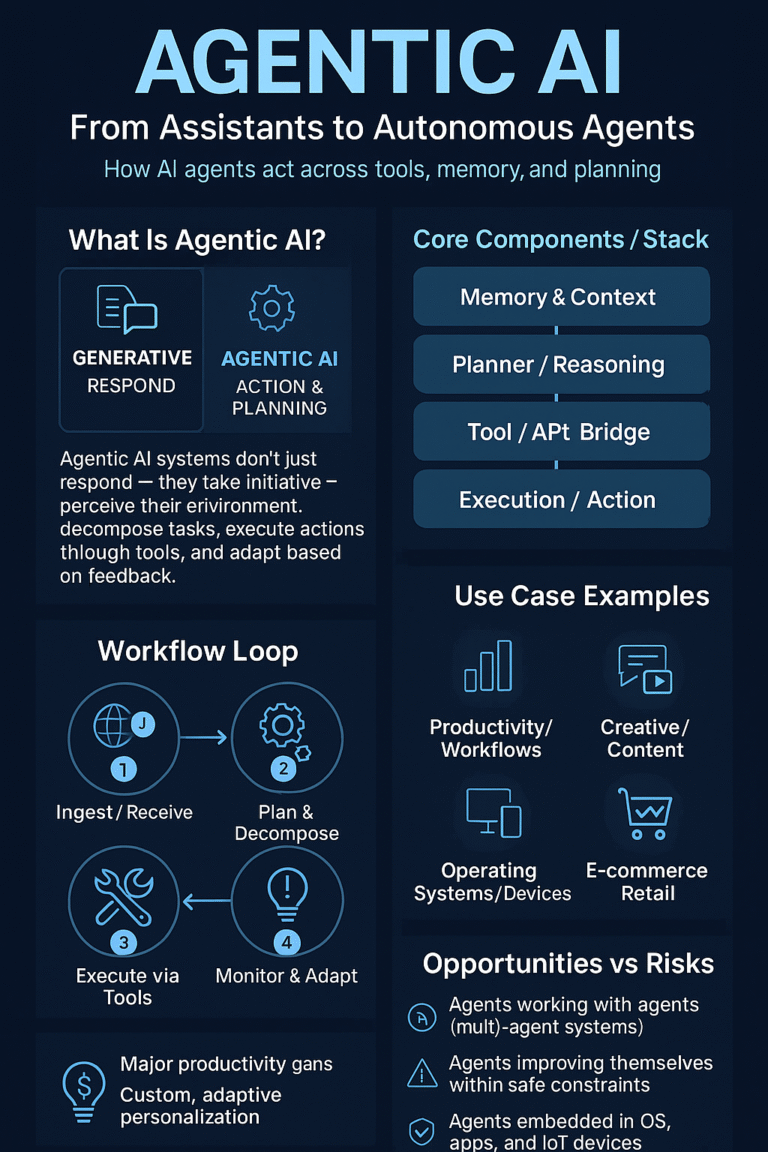
AI as a Teammate → Tools like CrewAI and AutoGen structure collaboration between humans and agents.
-
Skill Shifts → Demand grows for AI literacy, prompt engineering, and oversight roles.
-
Productivity Explosion → McKinsey estimates AI could add trillions in global GDP by 2030.
🔹 Risks and Challenges
-
Job Displacement: Routine clerical, service, and even knowledge jobs at risk.
-
Inequality: High-skill workers may gain; low-skill workers may struggle.
-
Over-Reliance: AI blind spots can cause critical errors in legal, healthcare, or finance workflows.
-
Trust & Ethics: Biased models risk amplifying inequalities.
🔹 What Work Might Look Like in 2035
-
AI-Augmented Professions: Doctors with diagnostic copilots, lawyers with case-research bots, teachers with adaptive tutors.
-
New Jobs: AI ethicists, model auditors, human–AI interaction designers.
-
Workplace Structure: Smaller teams, but amplified by AI assistants acting as multipliers.
-
Global Talent Shift: Remote, AI-augmented workers in emerging markets compete equally with developed economies.
🔹 Preparing for the Transition
-
Upskilling at Scale: Governments and firms must fund reskilling programs.
-
Human-in-the-Loop Models: Especially critical in safety-sensitive fields.
-
Policy Interventions: Social safety nets and regulations to smooth workforce shifts.
-
Cultural Change: Redefining productivity, creativity, and even the meaning of work.