Microsoft Stuns the AI World by Integrating Claude Into Microsoft 365 Copilot
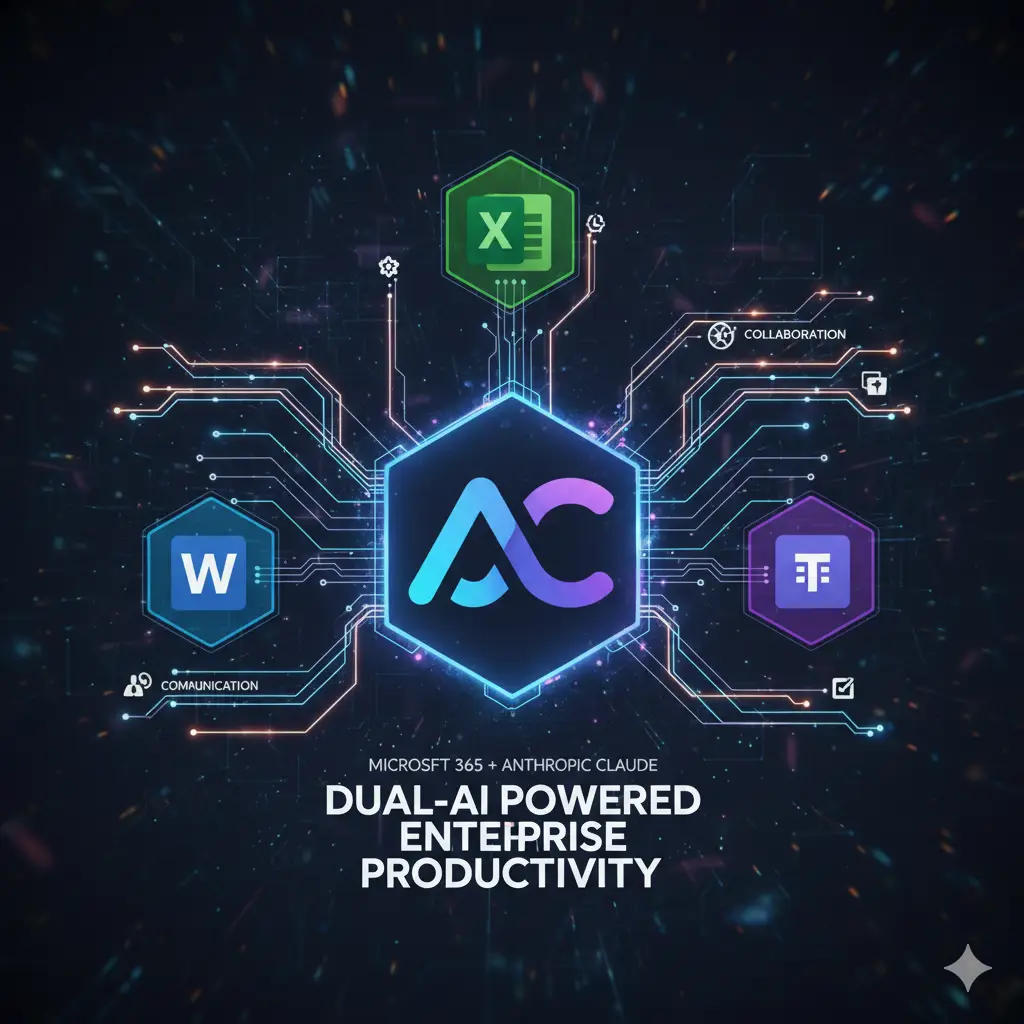
In a move that surprised even industry insiders, Microsoft has officially integrated Anthropic’s Claude Sonnet 4.5 model into its Microsoft 365 Copilot suite — marking the first time the tech giant has added a non-OpenAI model into its flagship productivity ecosystem.
This dual-AI strategy could reshape how millions of professionals interact with Microsoft tools, signaling the beginning of a multi-agent productivity era where users can choose between different AI “brains” for research, writing, and reasoning.
What Happened
Microsoft quietly rolled out the integration last week, allowing enterprise users and Copilot Studio developers to toggle between OpenAI’s GPT-4 Turbo and Anthropic’s Claude Sonnet 4.5.
The update adds a new “Triclord” button inside 365 Copilot apps (Word, Excel, Teams, Outlook), letting users choose which AI handles a given task. For example:
- GPT-4 Turbo for summaries or data synthesis
- Claude Sonnet 4.5 for long-context reasoning and document understanding
Claude’s massive 1 million-token context window allows users to process entire books, multi-year reports, or chat histories without truncation — a feat GPT-4 can’t match yet.
This marks a pivotal shift in Microsoft’s AI strategy: after years of betting exclusively on OpenAI, it’s now opening the door to multi-model intelligence across its platform.
Why It Matters
- End of the Single-Model Era
Microsoft’s move signals that the future of enterprise AI is plural. Rather than relying on a single model provider, the company is positioning itself as a hub for multiple advanced models — giving users flexibility, reliability, and competition within the same interface.
- Claude’s Context Advantage
Claude 4.5’s 1 million-token limit sets a new benchmark in enterprise-grade reasoning. It can analyze thousands of documents, legal contracts, or research archives in one go — ideal for sectors like law, consulting, and academia.
- Strategic Alignment with Anthropic
Anthropic’s focus on “constitutional AI” — building safer, more interpretable models — helps Microsoft appeal to corporate clients who demand compliance and transparency. It also future-proofs Microsoft 365 as regulation around AI usage tightens globally.
- OpenAI + Anthropic: The Dual Engine
By hosting both OpenAI and Anthropic models, Microsoft essentially becomes a platform-agnostic AI powerhouse. That could attract developers from both ecosystems to build inside Copilot Studio, potentially making Microsoft 365 the central workspace for intelligent automation.
What’s Next
Microsoft insiders suggest this dual-AI architecture is only the beginning.
- More model integrations (possibly Gemini, Mistral, or Perplexity APIs) are expected by early 2026.
- Microsoft is experimenting with a “dynamic model routing” system — automatically choosing the best AI for each task.
- Enterprise customers could soon have access to private fine-tuned models inside their tenant environments, merging internal data with external AI reasoning.
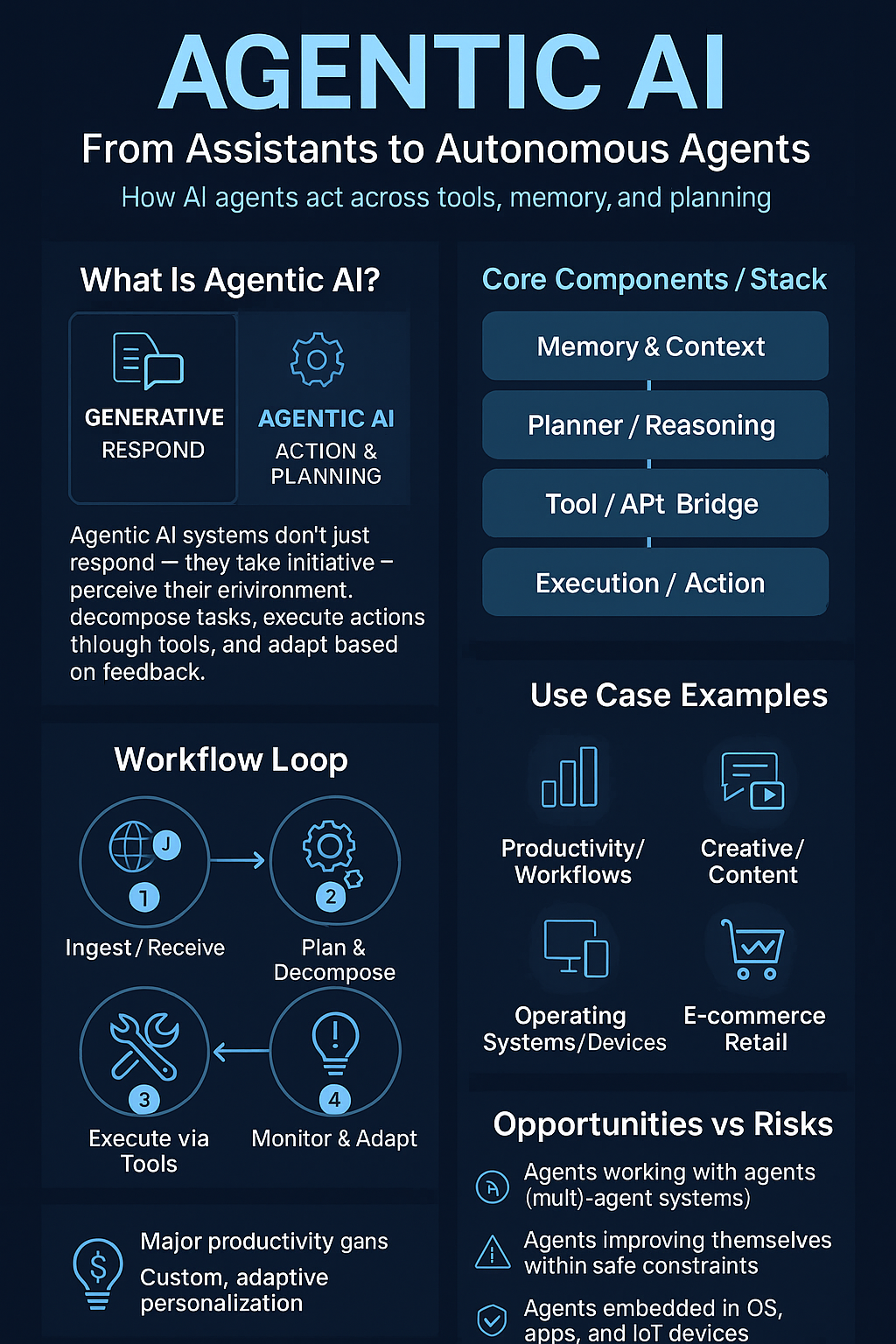
This could turn Microsoft 365 into a living AI ecosystem, where models collaborate, cross-check, and even debate results to enhance reliability — a concept dubbed Agentic Collaboration.
“Microsoft just made 365 the most powerful AI workspace on the planet — not because of one model, but because of choice.”
KEY TAKEAWAYS
- Microsoft adds Claude Sonnet 4.5 to Microsoft 365 Copilot, joining GPT-4 Turbo.
- Claude’s 1 million-token context window allows unprecedented document processing.
- Signals the end of single-model dominance in enterprise AI ecosystems.
- Aligns Microsoft with Anthropic’s ethical and constitutional AI principles.
- Future updates may bring multi-model collaboration and dynamic routing.