LangChain vs AutoGen vs CrewAI — The Battle for the Future of Agentic AI Frameworks
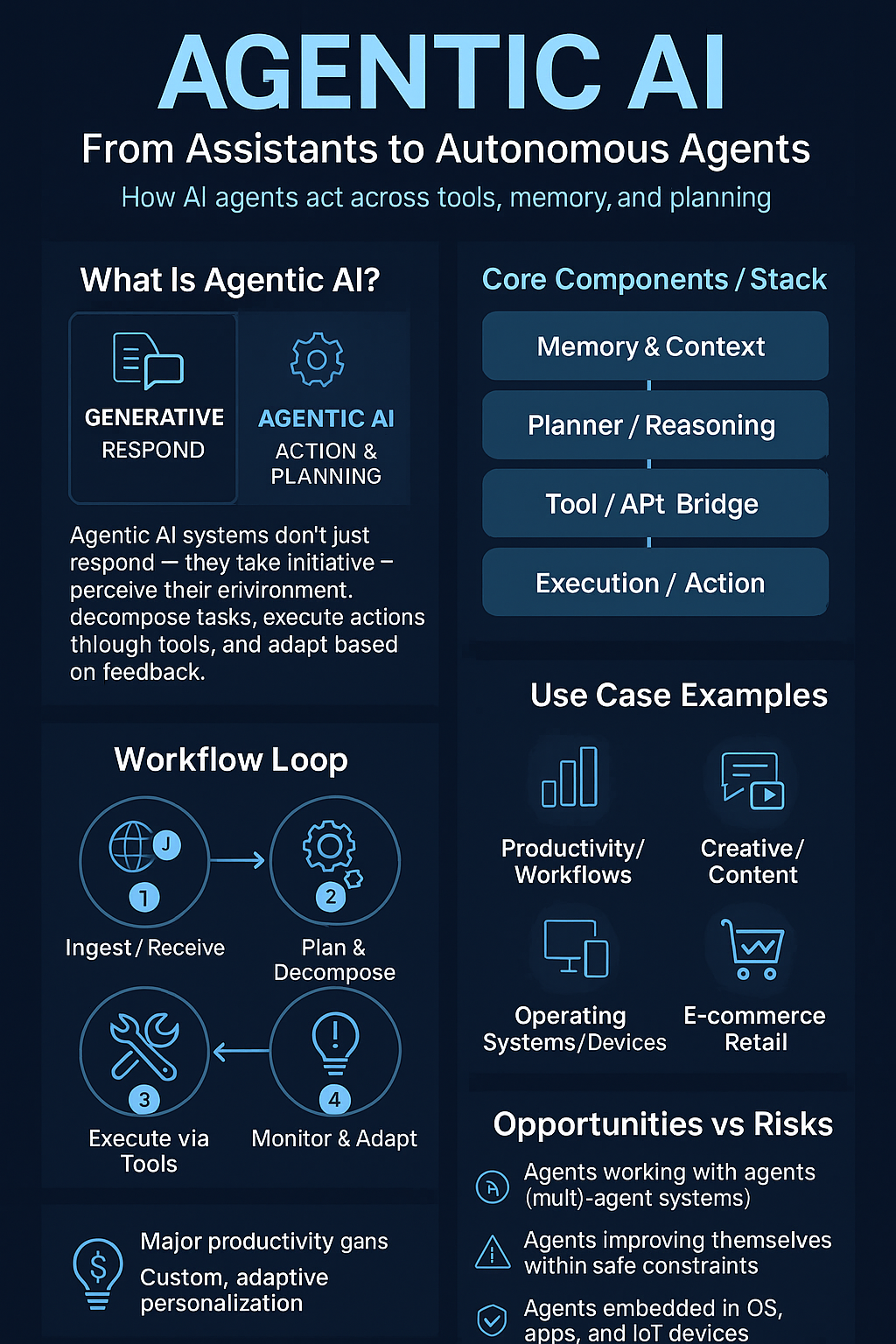
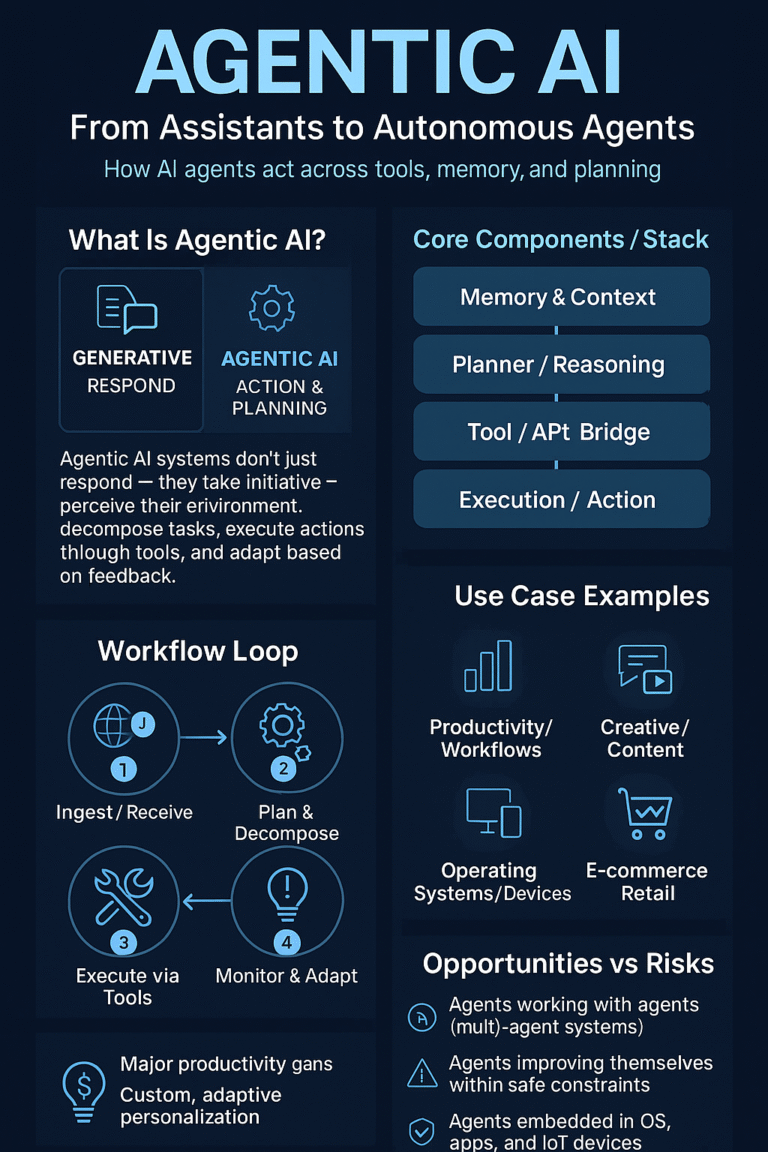
Agentic AI isn’t just about smarter models — it’s about frameworks that help them act, plan, and coordinate. Three leading contenders dominate the space: LangChain, AutoGen, and CrewAI. Here’s how they compare.
📊 Head-to-Head Comparison
| Feature | LangChain | AutoGen | CrewAI |
|---|---|---|---|
| Release Year | 2022 (mature ecosystem) | 2023 | 2024 |
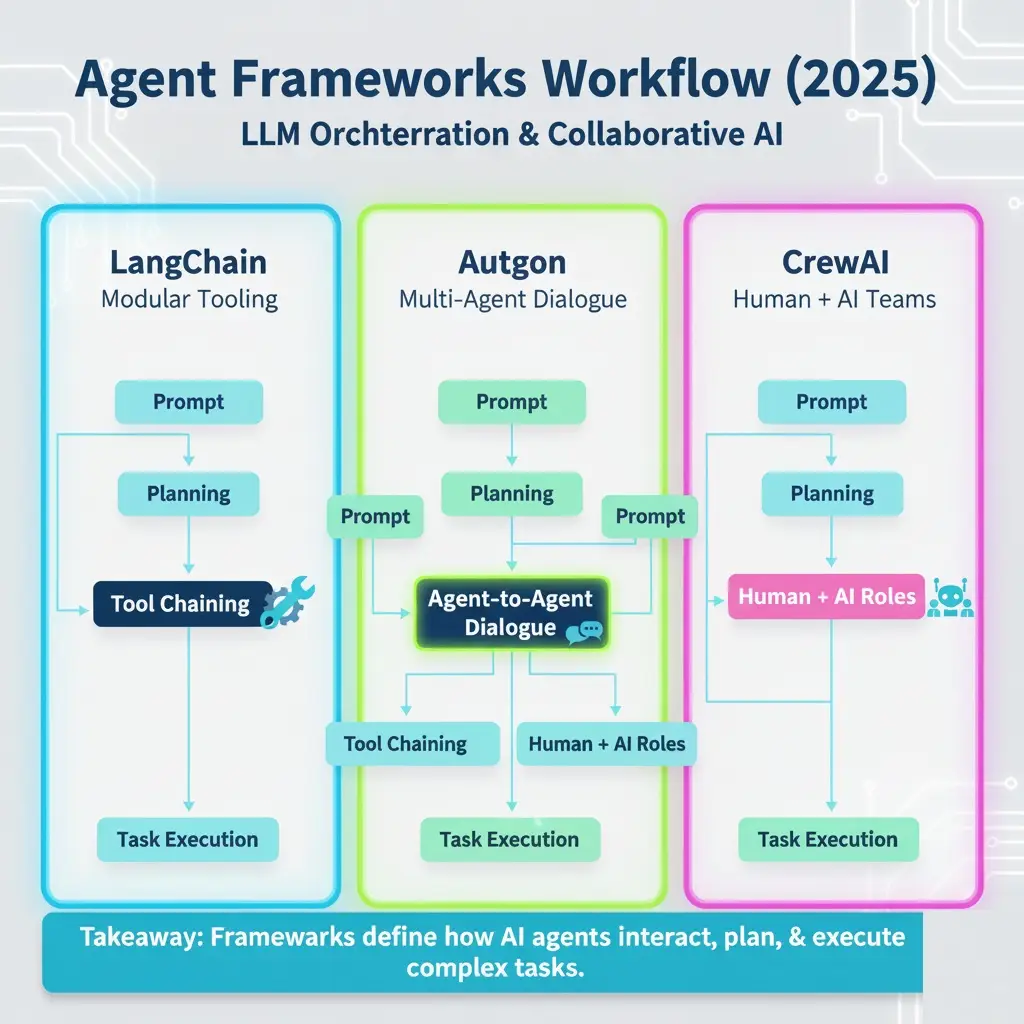
| Core Strength | Modular tool chaining, massive ecosystem | Multi-agent orchestration, dialogue between AIs | Human + AI team coordination, role assignment |
| Ease of Use | Large learning curve but tons of tutorials | Relatively straightforward for devs | User-friendly, workflow-focused |
| Community | Huge open-source support | Strong research adoption | Growing startup & enterprise interest |
| Integrations | APIs, databases, external tools | Works with LLMs + APIs, agent-to-agent chats | Built-in role templates (e.g., PM, Dev, Researcher) |
| Best For | Developers building custom agent pipelines | Researchers prototyping multi-agent systems | Teams/businesses adopting collaborative AI |
⚖️ Pros & Cons
LangChain
✅ Most mature & widely used
✅ Extensive plugin ecosystem
❌ Can feel over-engineered
❌ Steep learning curve
AutoGen
✅ Natural for multi-agent interactions
✅ Easy to set up for experiments
❌ Smaller community
❌ Less production tooling
CrewAI
✅ Focused on human + AI collaboration
✅ Great for structured workflows
❌ Still new & evolving
❌ Limited ecosystem vs LangChain
🎯 Who Should Use Which?
-
LangChain → Best for developers who want ultimate flexibility and access to the largest library of connectors.
-
AutoGen → Best for researchers & labs testing AI-to-AI collaboration.
-
CrewAI → Best for startups & enterprises deploying AI as a collaborative teammate in real workflows.