AI Infrastructure Wars: Cloud Giants vs Open Source vs Custom Chips
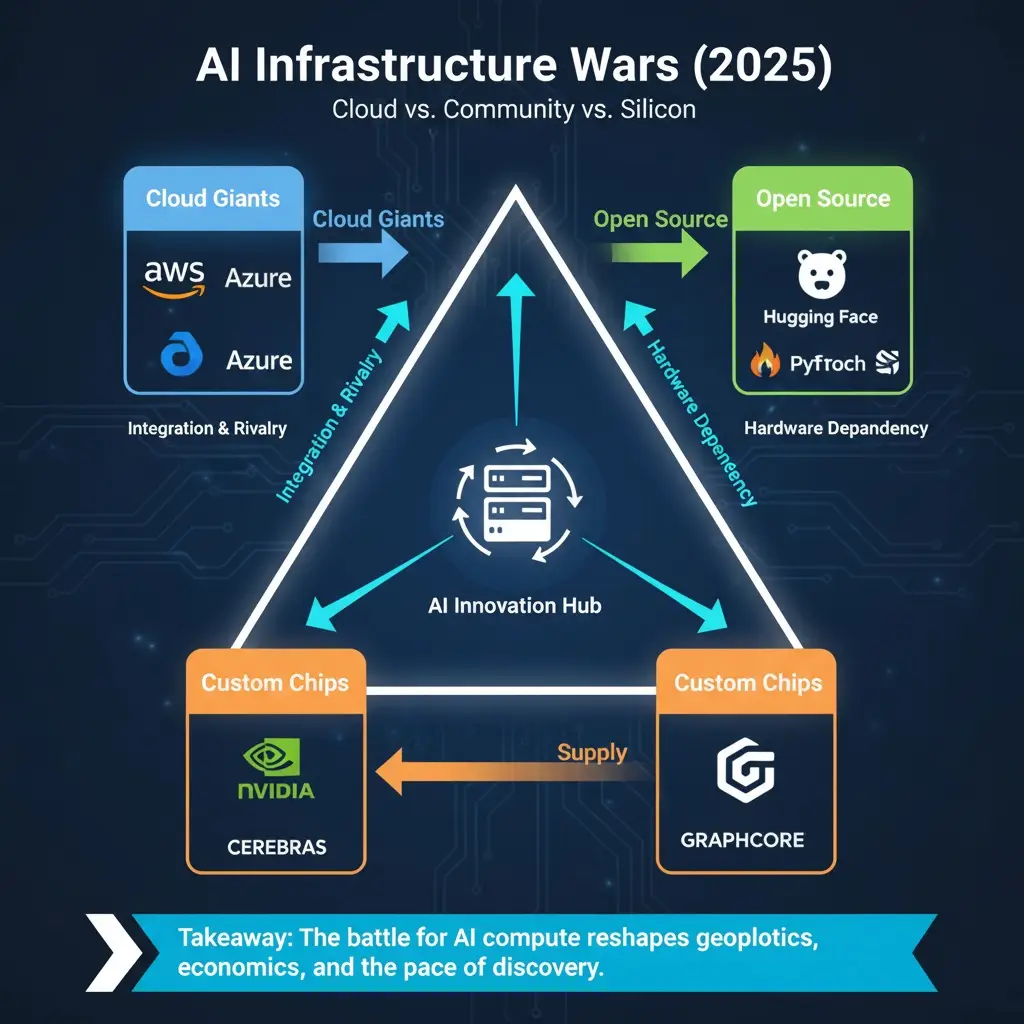
Behind every breakthrough AI model lies a hidden battlefield: infrastructure. From GPUs to custom silicon, the fight over who powers the next wave of intelligence is intensifying. In 2025, three forces dominate the race — cloud hyperscalers, open-source communities, and custom chipmakers.
🔹 Cloud Giants: Scale as a Moat
AWS, Microsoft Azure, and Google Cloud are building AI infrastructure at planetary scale.
Strengths: On-demand scaling, global reach, enterprise-grade reliability.
Weaknesses: High costs, vendor lock-in, environmental impact.
Recent Moves: Microsoft investing heavily in Azure AI clusters; Google pushing TPU v5; AWS betting on Trainium chips.
🔹 Open Source: Democratizing Access
Communities around PyTorch, Hugging Face, and Stability AI are driving cost-effective alternatives.
Strengths: Transparency, flexibility, cost savings (self-hosted).
Weaknesses: Complexity of deployment, need for GPU/TPU access.
Recent Moves: Hugging Face partnerships for on-prem hosting; Stability AI open models like SDXL fueling edge adoption.
🔹 Custom Chips: Efficiency & Control
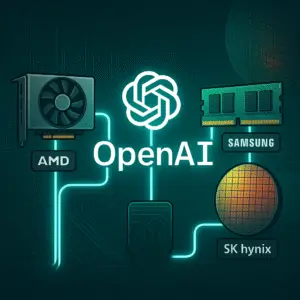
Nvidia still rules GPUs, but challengers are rising.
Apple, Google, Meta → Building in-house AI chips to cut reliance.
Startups → Cerebras, Graphcore, Tenstorrent pushing specialized silicon.
Strengths: Tailored efficiency, reduced inference costs.
Weaknesses: Immense R&D cost, limited supply chain.
🔹 Why This War Matters
Economic Stakes: The cost of training GPT-5 was estimated in the hundreds of millions. Infrastructure efficiency can make or break companies.
Geopolitical Edge: Chips are now a national security issue, with U.S.–China tensions reshaping supply chains.
Innovation Speed: Whoever controls infrastructure dictates the pace of AI breakthroughs.
🔹 The Road Ahead
Hybrid Cloud + On-Prem Models will rise, blending hyperscaler flexibility with enterprise control.
AI-Specific Chips (beyond GPUs) will dominate by 2030.
Green AI Infrastructure will become mandatory as training costs clash with carbon targets.
Fragmentation Risk: Too many custom stacks may slow interoperability.