Agentic AI Frameworks: LangChain, AutoGen, and CrewAI Compete to Power the Next Generation of Autonomous Systems
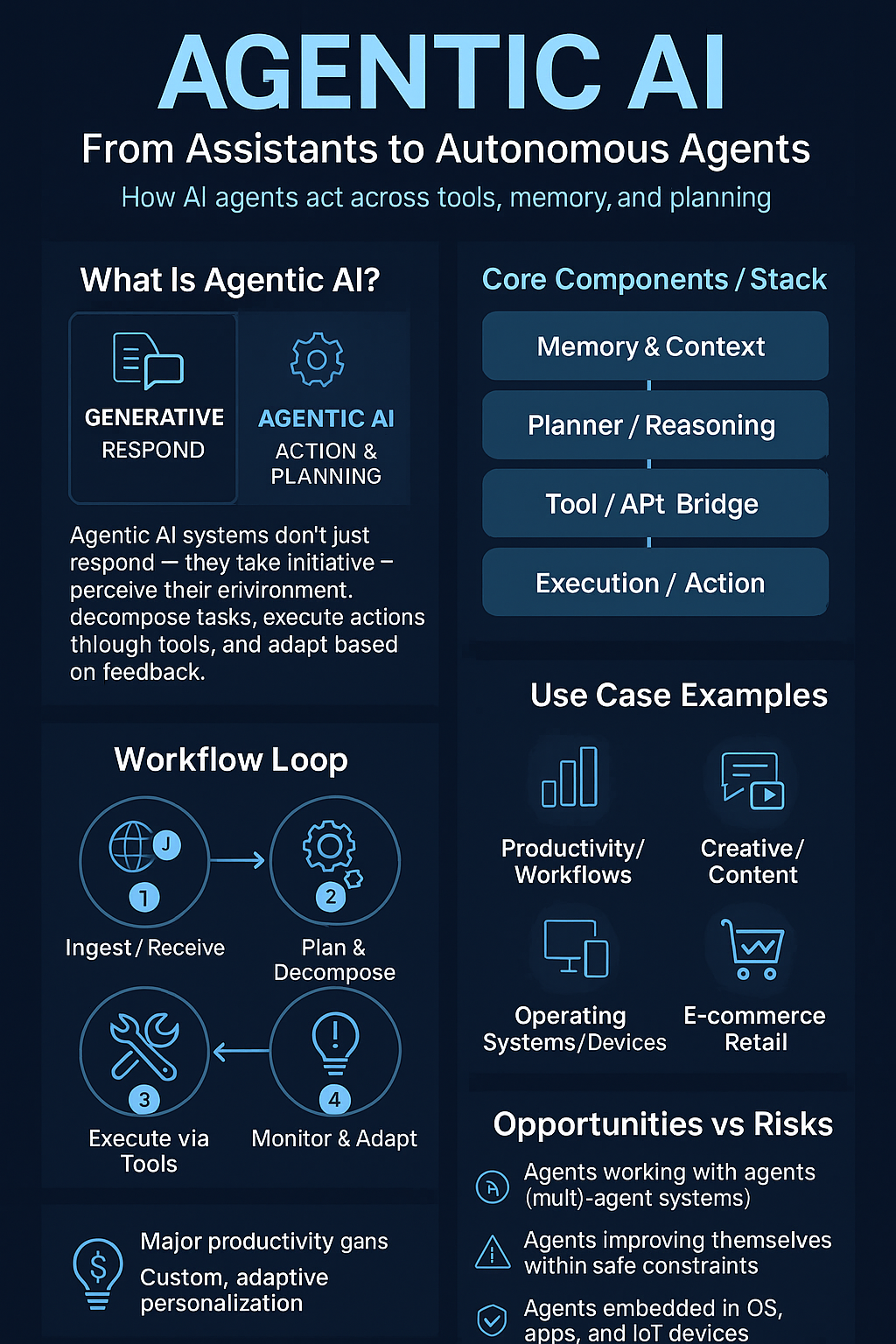
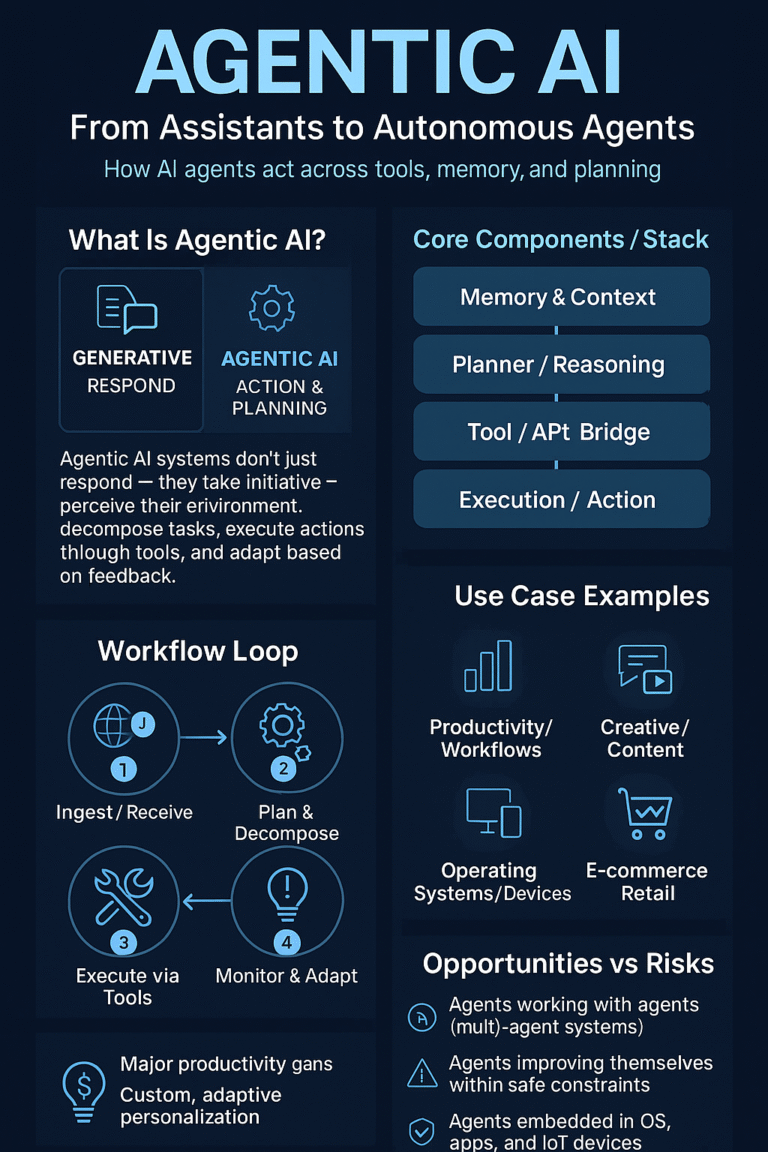
Agentic AI isn’t just about smarter models — it’s about AI systems that can plan, act, and collaborate autonomously. At the heart of this transformation are frameworks like LangChain, AutoGen, and CrewAI, which are redefining how developers build AI agents capable of performing multi-step reasoning and coordinated workflows.
As AI shifts from assistants to collaborators, understanding these frameworks isn’t optional — it’s essential. Each represents a unique approach to Agentic design, shaping how enterprises, startups, and researchers build the next wave of intelligent systems.
What Happened
The rise of Agentic AI frameworks reflects a major shift in developer priorities — from building static chatbots to creating dynamic, goal-driven agents.
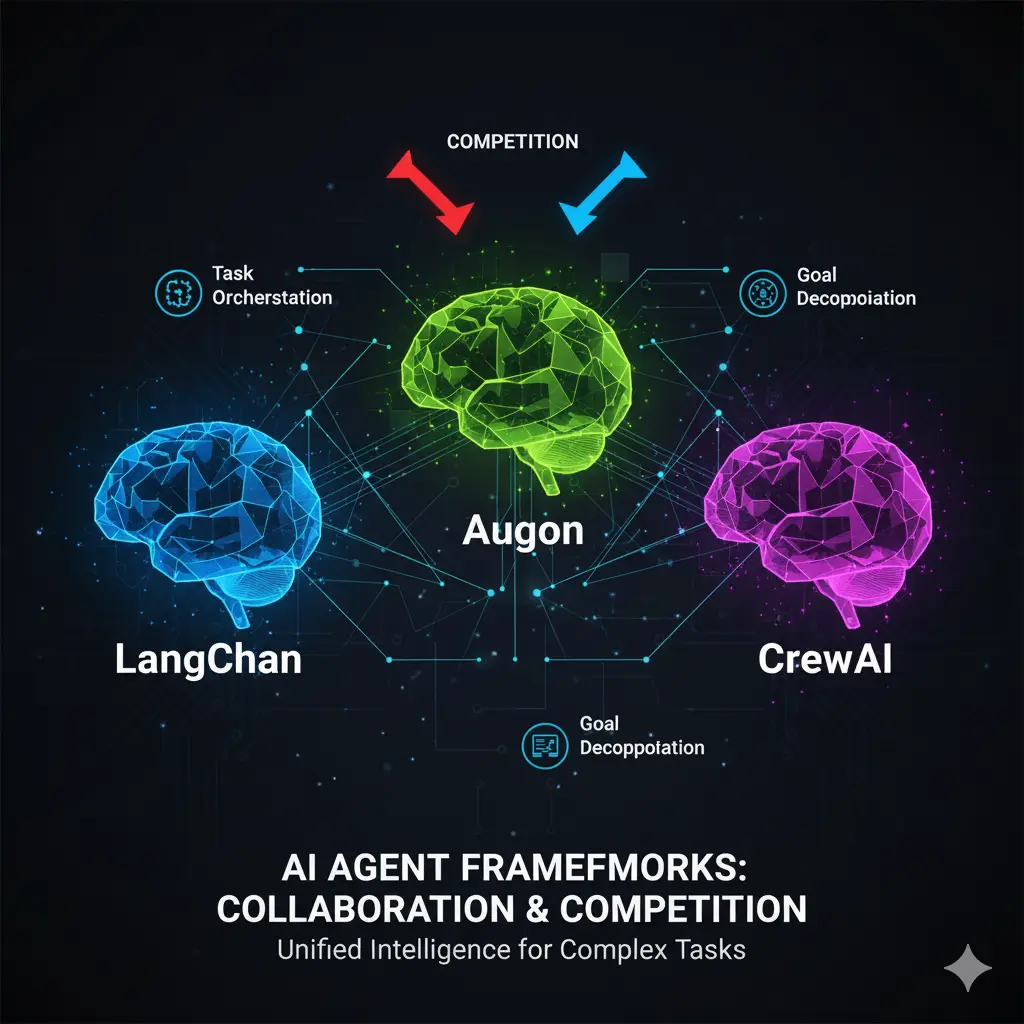
- LangChain: The most mature of the three, LangChain offers an extensive toolkit for prompt chaining, memory management, and API integration. It’s ideal for enterprises looking to embed LLM reasoning into applications.
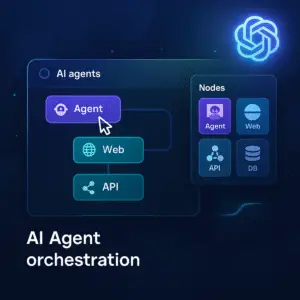
- AutoGen: Developed by Microsoft Research, AutoGen introduces multi-agent orchestration, allowing AI agents to collaborate, debate, and optimize outcomes autonomously.
- CrewAI: A more recent open-source framework, CrewAI focuses on modular teamwork among agents — enabling structured collaboration where multiple agents perform specialized roles, like writing, reviewing, and executing tasks together.
Together, these frameworks define the Agentic AI ecosystem: systems where language models don’t just respond — they think, decide, and act.
Why It Matters
- The Shift From Reactive to Proactive AI
Traditional AI assistants (like ChatGPT or Gemini) wait for input. Agentic frameworks allow AI to take initiative, plan steps, and learn from feedback — a leap toward autonomy.
- Enterprise Use Cases Multiply
From automating research to managing cloud infrastructure, these frameworks enable:
- AI developers that debug and refactor code
- AI recruiters that screen resumes and schedule interviews
- AI analysts that synthesize reports and forecast trends
- The “Operating System for Agents” Race
Whoever defines the standard architecture for multi-agent collaboration could dominate the next decade of software development — much like Android and iOS did for smartphones.
LangChain currently leads in adoption, AutoGen in enterprise reliability, and CrewAI in team-based AI dynamics — but the space is evolving rapidly.
What’s Next
Expect a surge in cross-framework interoperability. The future likely includes:
- Agent Hubs that connect LangChain, AutoGen, and CrewAI seamlessly
- Governed AI ecosystems where agents audit and correct each other
- Industry-specific agents (finance, legal, healthcare) with custom logic
By 2026, major companies may be running “AI teams” alongside human teams, each powered by an orchestration framework.
“The next billion-dollar startup won’t build a chatbot — it’ll build an agentic ecosystem.”
KEY TAKEAWAYS
- LangChain, AutoGen, and CrewAI lead the Agentic AI revolution.
- LangChain excels in flexibility; AutoGen in reliability; CrewAI in teamwork.
- Marks a transition from assistant AI to autonomous collaborators.
- Enterprises are adopting agentic systems to automate reasoning and planning.
- Framework interoperability and standardization are the next frontiers.