Can AI Create a Consistent Virtual Influencer?
I tested whether current AI image-generation tools could maintain the same believable virtual person across different poses, outfits, locations and content sessions.
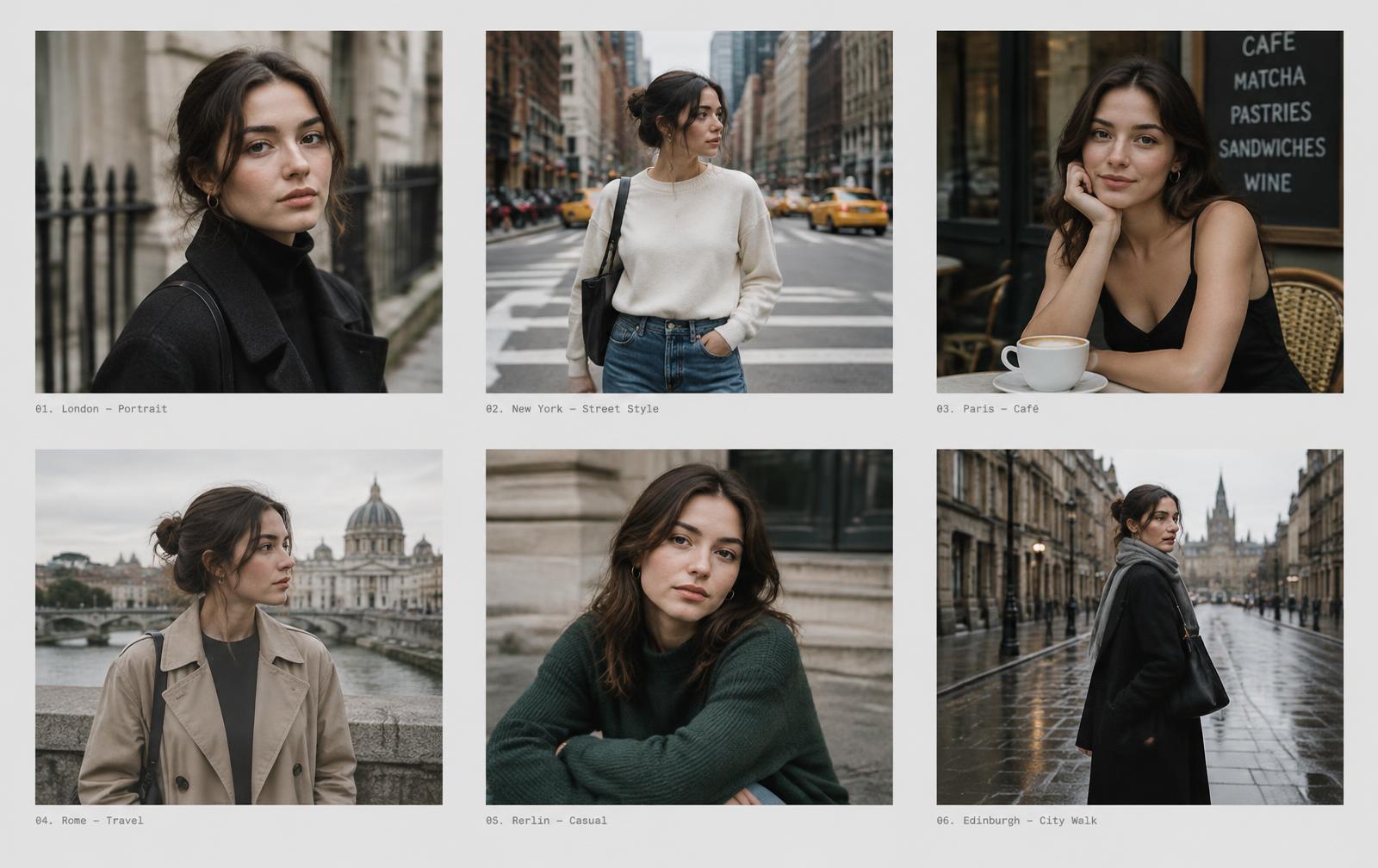
The Question
Can today's AI image-generation tools create a virtual person who remains recognizably consistent across multiple images, outfits, environments and content sessions?
Quick Answer
Yes — but only with a disciplined workflow. Generating one convincing image was relatively easy. Maintaining the same believable person across multiple scenes required an identity anchor, tightly controlled prompts and consistent decisions about appearance, clothing, accessories, environment and styling.
The Hypothesis
If AI-generated virtual influencers are practical for ongoing content creation, it should be possible to create the same recognizable character repeatedly rather than generating a different-looking person every time the scene, outfit or pose changes.
What I Used
What I Did
- Created a core virtual influencer identity and selected a consistent visual reference.
- Used SOUL ID as the identity anchor for subsequent generations.
- Tested the character across different camera angles, poses and environments.
- Tested clothing and accessory changes while attempting to preserve the same face, skin tone, hair and body proportions.
- Identified recurring consistency failures such as changing accessories, hairstyle, facial details and styling between otherwise related images.
- Introduced explicit continuity rules for each content session.
- Repeated those locked details in each related prompt instead of relying on the model to remember them.
- Compared the generated images and refined prompts whenever the character drifted from the intended identity.
- A strong identity anchor substantially improved character consistency.
- Repeating locked details in every prompt worked better than assuming the model would preserve them automatically.
- Keeping one outfit, hairstyle, jewelry set and environment consistent within a session improved continuity.
- AI could produce convincing editorial and lifestyle imagery once the identity workflow was established.
- Image carousels were easier to keep visually consistent than long video sequences.
- Character identity could drift between generations.
- Accessories could change unexpectedly even when the person remained recognizable.
- Hair, clothing details and props sometimes changed between images from the same intended scene.
- Asking for too many changes in a single generation increased inconsistency.
- Maintaining continuity across video generation remained harder than maintaining it across still images.
The Result
The experiment showed that a consistent AI influencer is practical, but not as a one-prompt workflow. The strongest results came from treating identity and continuity as a system: one identity anchor, explicit session rules and repeated control of clothing, accessories, hair, props and environment.
What I'd Do Differently
I would establish the complete consistency framework before creating the first public content set — identity anchor, hairstyle, body proportions, recurring accessories and session-specific continuity rules — instead of correcting inconsistencies after images had already been generated.
Final Verdict
Yes — but consistency does not happen automatically. Reliable results required a strong identity reference, tightly controlled prompts and deliberate continuity rules across every generation.
Lessons
- Character consistency is a workflow problem, not just a prompt problem.
- Identity should be anchored once and then protected across every subsequent generation.
- Details that humans consider minor — jewelry, shoes, bags, hairstyle and props — can make AI-generated continuity feel obviously wrong.
- Related images should be treated as one controlled session rather than as independent prompts.
- Still-image content is currently easier to keep consistent than multi-shot AI video.
Continue Experimenting

Yes — but consistency does not happen automatically. Reliable results required a strong identity reference, tightly controlled prompts and deliberate continuity rules across every generation.
Join the Lab
Get new experiments, practical workflows, lessons and resources as they're published — including the things that didn't work.
Signup functionality is not active yet. We are not collecting email addresses until a real newsletter provider is connected.